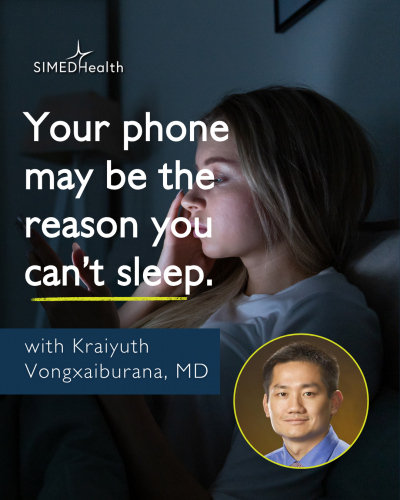
Blue Light and Sleep Disruption: Your Phone May Be The Reason You Can’t Sleep
Scrolling on your phone before bedtime might be contributing to your sleep difficulties. Many individuals check their phones, or watch TV before going to sleep, but blue light from electronic devices can sabotage your sleep. Kraiyuth Vongxaiburana, MD, a SIMEDHealth Neurology & Sleep Medicine physician breaks down how your device could be affecting your body’s sleep cycle.
To learn more about Kraiyuth Vongxaiburana MD, click here.
To learn more about SIMEDHealth Sleep Clinic, click here.
Dr. Vongxaiburana is located at:
SIMEDHealth Gainesville, 4343 Newberry Road, Gainesville, FL 32607
1. What is blue light and how does it affect your body’s sleep?
Blue light is a short-wavelength, high-energy part of visible light. Blue light exposure helps keep you alert, but at night it can suppress melatonin and shift your daily internal clock later, making it harder to fall asleep and stay asleep. In the late evening, blue light from phones, tablets, TVs, and computers can adversely affect sleep.
2. What sleep-related symptoms are reported when using electronic devices before bed?
Common complaints are difficulty falling and staying asleep, later bedtimes, poor sleep quality, unrefreshing sleep, and daytime sleepiness.
3. Does it matter what you’re doing on your electronic device before bed?
Stimulating or emotionally charged content such as social media, work, stressful messages, competitive games, or doomscrolling can increase mental arousal and adversely affect sleep even beyond the blue light effect. Quiet, calm, relaxing content is less disruptive.
4. How long before bedtime should someone stop screen time?
If you’re having difficulty with falling to sleep, avoid screen time for one1 hour before bedtime.
5. Do night mode settings or blue light-blocking glasses really help?
If you have to be on your device in the evening, these reduce blue light exposure, and may help some with sleep some, although studies on this are mixed. A better alternative is to avoid screen time close to bedtime.
6. Any other tips to improve sleep?
Keep a regular sleep schedule even on the weekends, keep the bedroom cool/dark/quiet, get regular exercise earlier in the day, avoid heavy meals and alcohol close to bedtime, and use relaxing bedtime routines such as reading, deep breathing exercises, listening to calm music or taking a bath. It also helps to keep the phone out of bed; in another room if possible.
7. When should one talk to a physician about sleep problems?
Talk to a physician if sleep problems are regularly happening, if you have trouble falling or staying asleep, if you wake unrefreshed, or if daytime sleepiness affects work, driving, mood, concentration, or memory. You should also get checked if you have loud snoring, choking, gasping, or breathing pauses during sleep, since those can suggest sleep apnea.