Sjogren’s Disease: Symptoms, Diagnosis, Treatment
Sjogren’s disease is an autoimmune condition in which the immune system attacks the body’s moisture-producing glands. Meghavi Kosboth, DO, a SIMEDHealth rheumatologist, breaks down what Sjogren’s disease is, who’s at risk, signs and symptoms, how it’s diagnosed, and what treatment and lifestyle changes can help the condition.
1. What is Sjogren’s disease?
Sjogren’s disease is a chronic, autoimmune condition characterized by dry eyes and mouth due to inflammation in the tear ducts and salivary glands.
2. Who is at risk?
Women are 10 times more likely than men to develop Sjogren’s disease. It is most common in women, presenting between ages 45 to 55 years, but can be seen in younger adults as well.
3. What are the symptoms?
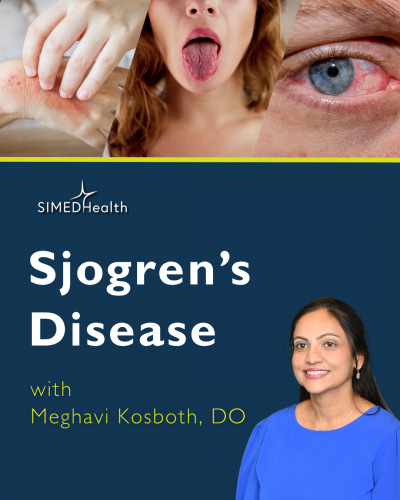
Most common symptoms are dry eyes and dry mouth. Eyes may burn, turn red or have a gritty sand like sensation in them due to reduction in tear production.
Dry mouth can cause loss of taste and smell as well as cause difficulty in swallowing food due to lack of saliva. Joint pains, rashes and swollen glands in the face and neck can additionally be seen.
4. What is the difference between primary and secondary?
Primary Sjogren’s presents by itself as a standalone disease; but, secondary Sjogren’s is seen in the setting of a pre-existing autoimmune disorder such as lupus, rheumatoid arthritis or scleroderma.
5. How is it diagnosed?
Sjogren’s diagnosis requires a detailed history and physical exam followed by laboratory testing for autoantibodies such as anti- nuclear antibody (ANA), anti- SSA (Ro), anti-SSB (La) and rheumatoid factor (RF). An ophthalmologic examination is performed to evaluate the severity of dryness and often a salivary gland biopsy is needed to confirm the diagnosis.
6. What are the treatment options?
Treatments in this condition are geared towards relief from symptoms and prevention of long-term complications.
For symptomatic relief of dry eyes, we often use artificial tears, eye gels and prescription medications. These work to restore moisture and increase tear production. Similarly, for dry mouth we encourage adequate hydration and sugar free gum or candy; but, often patients need prescription medications to increase salivary production. In patients with severe symptoms or involvement of internal organ systems, medications like hydroxychloroquine, methotrexate, azathioprine, mycophenalate or rituximab may be used. New treatments are currently being developed and introduced for Sjogren’s disease.
7. What can patients do to help manage symptoms?
Adequate hydration with frequent sips of water, switching oral hygiene products to ones free of alcohol, use of a warm mist humidifier at night and diligently using eye drops help with improving day to day symptoms from Sjogren’s. It is crucial for patients should have regular ophthalmology evaluations to prevent infections and cornea damage; and regular dental evaluations to assess for tooth decay and cavities due to dryness. Additionally, a well-balanced diet, exercise and eliminating alcohol and tobacco use can improve symptoms and long-term damage in Sjogren’s disease.